
There is a peptide called Retatrutide that has been generating significant interest, especially among people who want — or need — to lose weight. And it’s not hard to understand why: those seeking weight loss often look for fast, practical solutions that promise near-“miraculous” results.
On social media and across various online platforms, Retatrutide has been presented as a potential revolution in weight management, further fueling curiosity around the compound. However, it’s important to separate expectation from reality.
Retatrutide does not perform miracles, nor should it be treated as a magic solution for weight loss. Although studies and reports point to satisfactory and relatively fast results in weight reduction, its effects depend on a wide range of factors, including diet, lifestyle, metabolism, professional guidance, and each individual’s biological response.
Furthermore, this is a compound still associated with specific research and analysis, which demands caution, responsibility, and access to reliable, high-quality information before drawing any hasty conclusions about its use. Let’s learn a little more about Retatrutide.
What Is the Composition of the Retatrutide Peptide and What Are Its Main Indications?
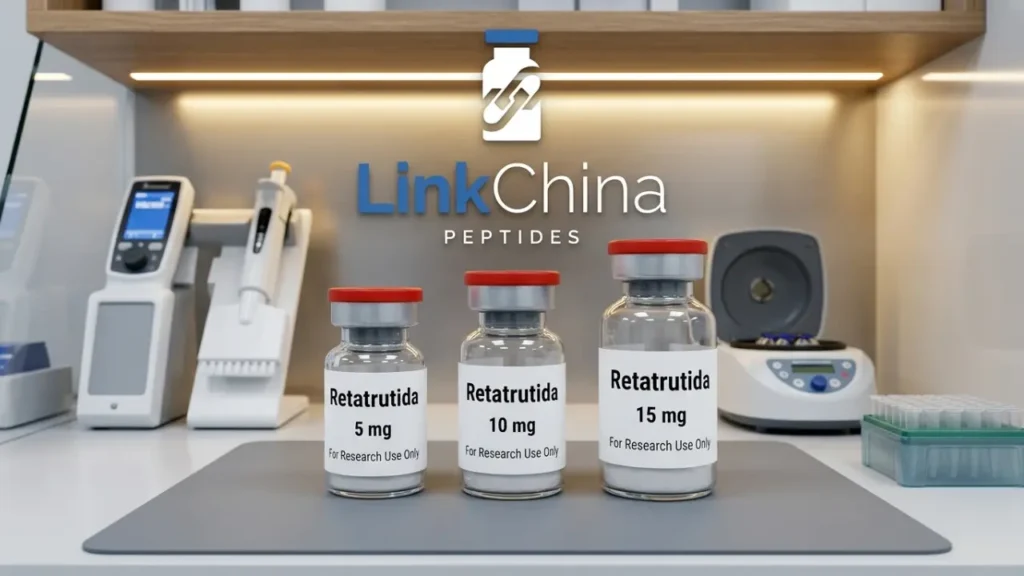
Retatrutide — also known by its development code LY-3437943 — is a synthetic peptide developed by the American pharmaceutical company Eli Lilly and Company. Its structure consists of a chain of chemically modified amino acids designed to make the molecule more stable in the body, resistant to enzymatic degradation, and capable of maintaining prolonged action when administered just once a week via subcutaneous injection.
The amino acid sequence of Retatrutide includes specific structural modifications — such as the replacement of natural amino acids with synthetic versions (such as 2-aminoisobutyric acid, Aib) and the addition of chemical groups that stabilize the molecule — which sets it apart from peptides naturally found in the body.
In simple terms: it’s as if molecular engineers had “armored” the molecule so that it remains active longer in the bloodstream and works with greater efficiency. What makes Retatrutide truly unique is its triple mechanism of action.
It is a triple hormone receptor agonist, acting simultaneously on the GLP-1 (glucagon-like peptide-1), GIP (glucose-dependent insulinotropic polypeptide), and glucagon receptors — meaning it “activates” three metabolic switches at once:
- GLP-1 → reduces appetite and improves insulin sensitivity
- GIP → enhances insulin response and glycemic control
- Glucagon → increases energy expenditure and promotes fat burning
No other known and approved drug to date activates all three receptors simultaneously with such potency — which explains the exceptional results observed in clinical studies conducted so far.
Main Indications Still Under Investigation

Retatrutide is being developed primarily as a treatment for obesity and type 2 diabetes, but its potential applications extend to several weight-related conditions, including non-alcoholic fatty liver disease (NAFLD), knee osteoarthritis, and obstructive sleep apnea.
Lilly’s Phase 3 clinical program, known as TRIUMPH, encompasses multiple studies involving more than 5,800 participants worldwide:
- Obesity and overweight — Phase 2 studies published in the New England Journal of Medicine already demonstrated average weight losses exceeding 17% at 24 weeks. Phase 3 results have shown average losses of up to 32 kg (≈71 lbs) combined with substantial relief from osteoarthritis pain. GoodRx
- Type 2 diabetes — improved glycemic control is achieved through the three combined mechanisms, without increasing the isolated risk of hypoglycemia.
- Fatty liver disease (NAFLD/MASH) — earlier-phase studies indicated that the drug may significantly reduce liver fat in people with obesity, potentially slowing the progression of NAFLD. The Care Pharmacy
- Knee osteoarthritis — in the TRIUMPH-4 study, participants using the 12 mg dose lost an average of 28.7% of their body weight over 68 weeks, with significant reductions in joint pain scores, and more than one in eight patients were completely free of knee pain by the end of the study. The Care Pharmacy
The Retatrutide Weight Loss Miracle? Not Exactly.
Despite all the recent attention surrounding Retatrutide, it is important to clarify that, as of May 2026, the compound still does not hold official regulatory approval from any major health agency, including the Food and Drug Administration (FDA) or Brazil’s National Health Surveillance Agency (ANVISA).
Currently, its use remains restricted to clinical research settings and, in some markets, to the category of compounds intended exclusively for scientific research.
Although preliminary weight loss results have generated strong interest from both the scientific community and the general public, Retatrutide is still under evaluation regarding its safety, efficacy, and eligibility for broad-use approval.
Eli Lilly and Company has signaled its intention to submit a regulatory application for the treatment of obesity and overweight throughout 2026. However, as of this writing, that process has not yet been completed — meaning the compound remains without official authorization for commercialization as an approved pharmaceutical product.
Retatrutide In Vitro – Is It Advisable?
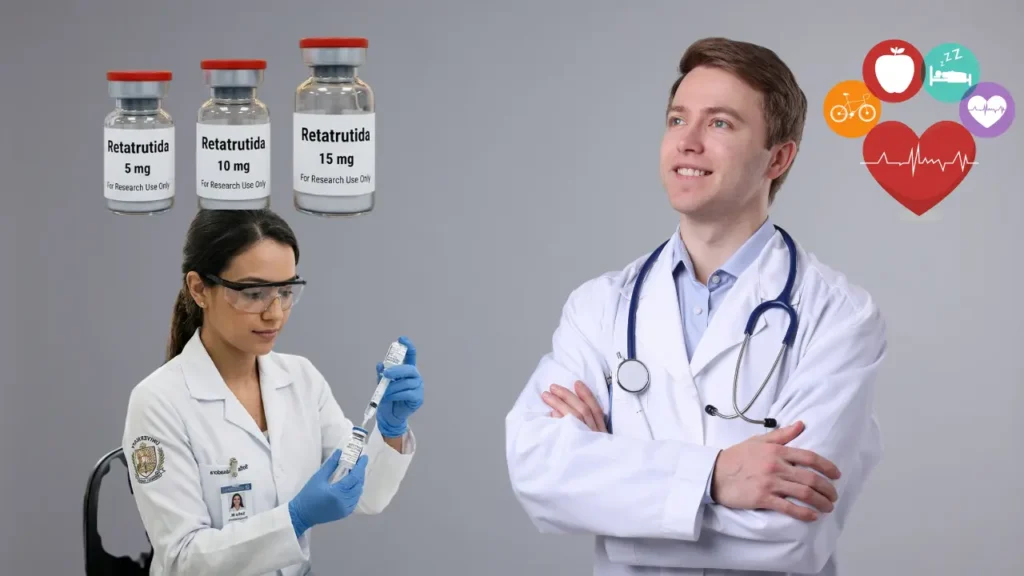
The only form currently available for acquiring Retatrutide outside of clinical trials is in lyophilized format — that is, as a dry, sterile powder contained in small bottles known as vials. Before any use, this powder must be reconstituted (diluted in bacteriostatic water or a compatible solution) and then administered via subcutaneous injection.
It is, therefore, a research-grade compound — not a finished, ready-to-use medication. These vials are available in different quantities: 5, 10, 15, 20, 30, 40, 50, 60, and 100 mg, allowing researchers and clinical protocols to select the most appropriate amount for their intended purpose.
As for whether use aimed at weight loss is advisable — the answer is not straightforward. Simply acquiring a vial of Retatrutide — regardless of the quantity — and beginning self-administration without criteria, without medical supervision, and without a structured protocol represents a real health risk.
Factors such as the individual’s clinical history, pre-existing conditions, potential interactions, age, correct reconstitution procedure, progressive dosing, and monitoring for adverse effects are absolutely critical for any use to be minimally safe and rational.
In our next article, we will address exactly this: “Without a Protocol, There Is No Safety: Understanding What Defines the Correct Use of In Vitro Peptides.” We strongly recommend reading that article and, beyond that, consulting relevant scientific literature before using any peptide in any format. The ideal approach is to seek medical guidance so that weight loss can be pursued without compromising your health.
LinkChinaPeptides: Information, Transparency, and Direct Connection with Manufacturers

If you are looking for more information about peptides, import processes, quality standards, and reliable sources for acquiring peptides, know that LinkChinaPeptides operates as your specialized intermediary connecting clients with in vitro peptide manufacturers in China.
With a focus on transparency, process support, and access to relevant technical information, the company assists researchers, professionals, and interested parties who wish to purchase and better understand the research peptide market — compounds intended exclusively for scientific research.
Speak with one of our representatives today. Click HERE to learn more